Cape Henlopen State Park sits at the exact point where Delaware Bay meets the Atlantic Ocean — more than 5,000 acres of beach, pine forest, salt marsh, and sand, six miles of shoreline where two bodies of water have been arguing over the same few hundred yards of coastline for thousands of years. The most visible result of that argument is the Great Dune: at about 80 feet above the ocean, it is, according to Delaware's own state historical marker on the site, the largest sand hill between Cape Cod, Massachusetts, and Cape Hatteras, North Carolina.
A dune that used to move
The Great Dune was not always 80 feet tall, and for most of its history it was not particularly stable. Wind, waves, and currents spent thousands of years piling sand at the mouth of the bay; beach grass and other plants grew in it, holding it in place and trapping more. By colonial times, the dune stood about 46 feet high and was covered in pine forest — a fixed, wooded landmark, not a moving one.
That changed once people started cutting the trees down. Loggers cleared much of the forest by the early 1800s, and fires burned most of what was left. Without roots to hold it, the sand came loose. Wind pushed the dune steadily inland, fast enough and far enough that it earned a nickname still used today: the Galloping Dune.
How the Army made it taller
The dune's current height has a specific, dateable cause. During World War II, when the Army built Fort Miles at Cape Henlopen as part of the coastal defense system guarding the entrance to Delaware Bay — the same system this publication covered in a separate story on the fire control towers still standing nearby — soldiers piled additional sand over the Great Dune to help conceal a newly built bunker. That added sand is what pushed the dune to its present height. Afterward, the Army planted grass, trees, and shrubs across it to hold the new sand in place, and the dune's movement, according to the state's own account, is not as noticeable today as it once was. The Great Dune, in other words, stopped galloping largely because a war made it heavier and the Army planted it down.
The part of the park that still moves
Not every dune at Cape Henlopen got the same treatment. A few miles from the Great Dune, the Walking Dunes Trail loops for roughly two and a half miles through an actively migrating dune field — wooded maritime forest, salt marsh wetland, and open sand in the same short walk. Here, wind-driven sand is still burying trees as it moves, and in places hikers pass through what looks like the tops of a normal pine forest but is actually the crowns of twenty- and thirty-foot trees whose trunks are already underground. Give the sand a few more decades and today's exposed treetops will be gone; a few decades before that, trees now fully buried were still standing in daylight. It is one of the only places on the Delaware coast where you can watch, in a single afternoon, exactly what building sand does to a forest over time — the same process that built the Great Dune, still running, a short drive away.
What to know before you go
The Great Dune and the Walking Dunes Trail are two different features inside the same park, and they are often confused for each other. The Great Dune, near the lighthouse markers and Fort Miles's Battery 519, is stabilized and no longer galloping in any noticeable way; it is the tallest point and the best view of the bay mouth. The Walking Dunes Trail, a separate hike elsewhere in the park, is where the active dune migration and the buried forest are actually visible today. Trail conditions and access can change seasonally at both sites, so it's worth checking current Delaware State Parks trail status before visiting.
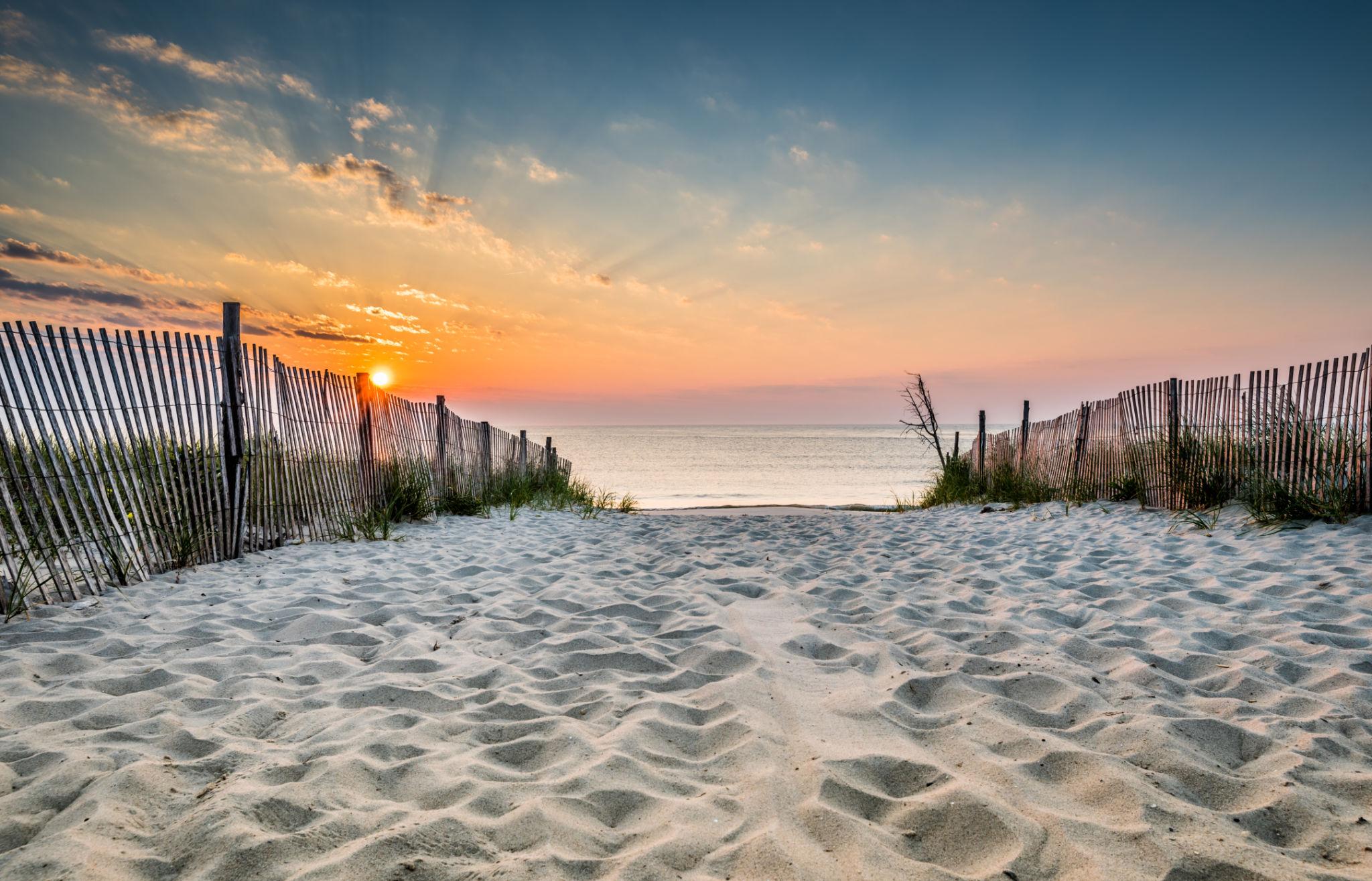
Sources: Delaware State Parks state historical marker, "The Great Dune: Living Sands," Cape Henlopen State Park, transcribed via the Historical Marker Database (hmdb.org); Delaware State Parks, Cape Henlopen State Park park description and trail information. Hero image: original Delaware Beach Finds coastal photograph, dune fencing at Delaware's shore (not Cape Henlopen-specific); a Cape Henlopen-specific photograph is recommended for a future upgrade.