You have seen them.
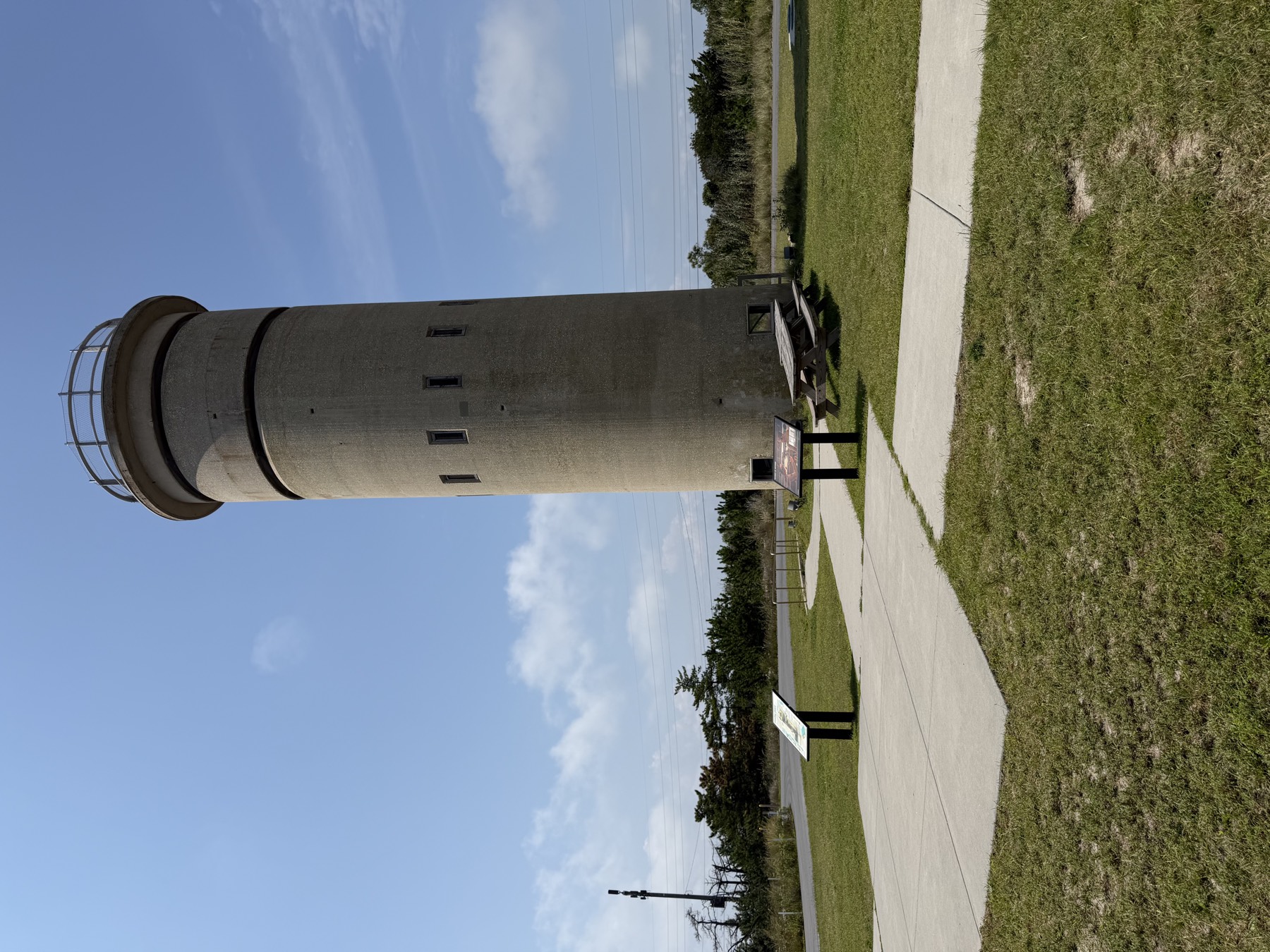
They stand along the Delaware coast — plain cylindrical concrete towers, several storeys of grey, with narrow horizontal slits near the top and no ornament of any kind. Some are in state parks. Some are behind houses. One is visible from the highway. They are photographed constantly, appear in an enormous number of vacation pictures, and are, by a wide margin, the most frequently misidentified structures in the state.
They are not lighthouses. They are not water towers, grain silos, or missile silos. They are not, despite a persistent guess, prisons. They are fire control towers, built during the Second World War to aim artillery, and understanding them requires understanding a problem that sounds simple and is not.
The problem
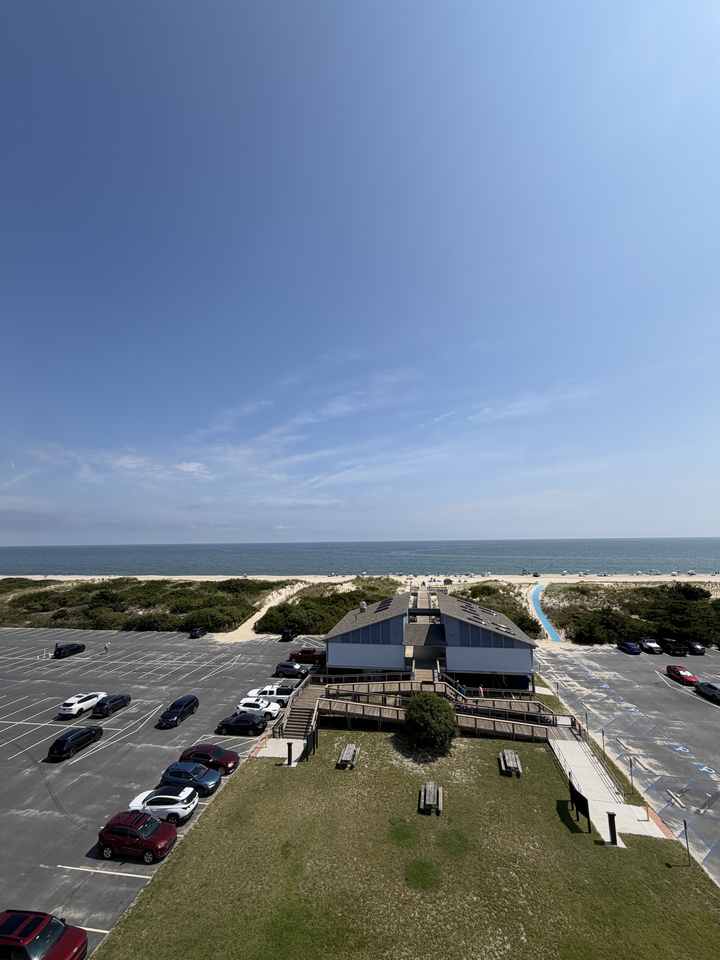
A coastal gun at Cape Henlopen firing at a warship offshore has to hit a moving target many miles away, over open water, with no landmarks to range against. The gun crew cannot solve this from the gun's own position. At ground level, a ship at extended range is a speck on the horizon, if it is visible at all. There is no way to judge its distance, course, or speed with any precision — and no way to compute where it will be by the time a shell arrives, seconds later.
The problem was never the gun. It was knowing where to point it.
The solution
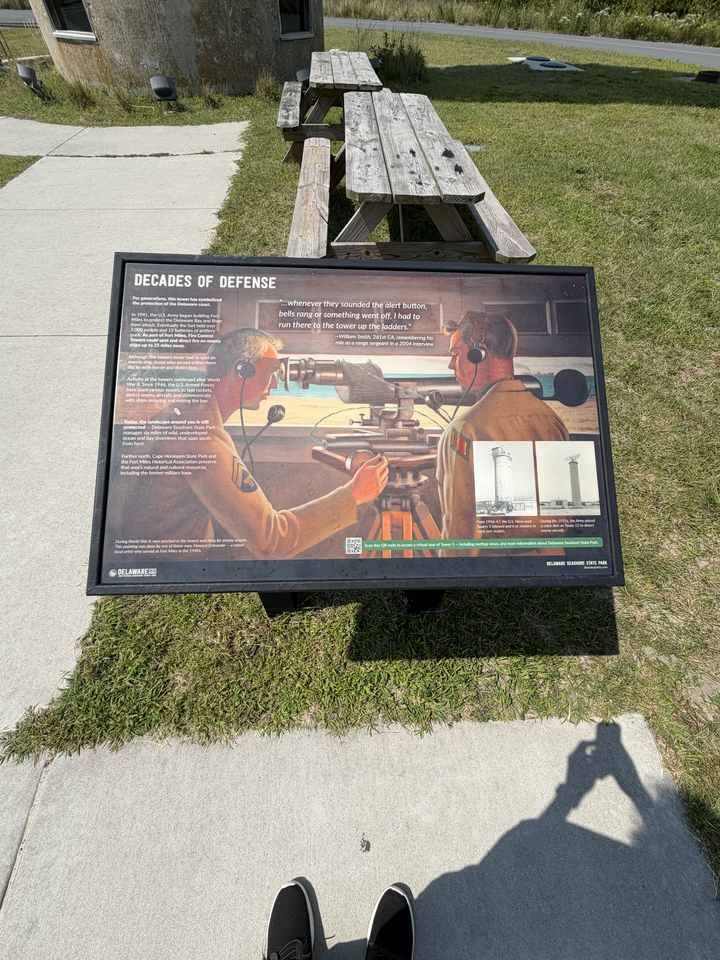
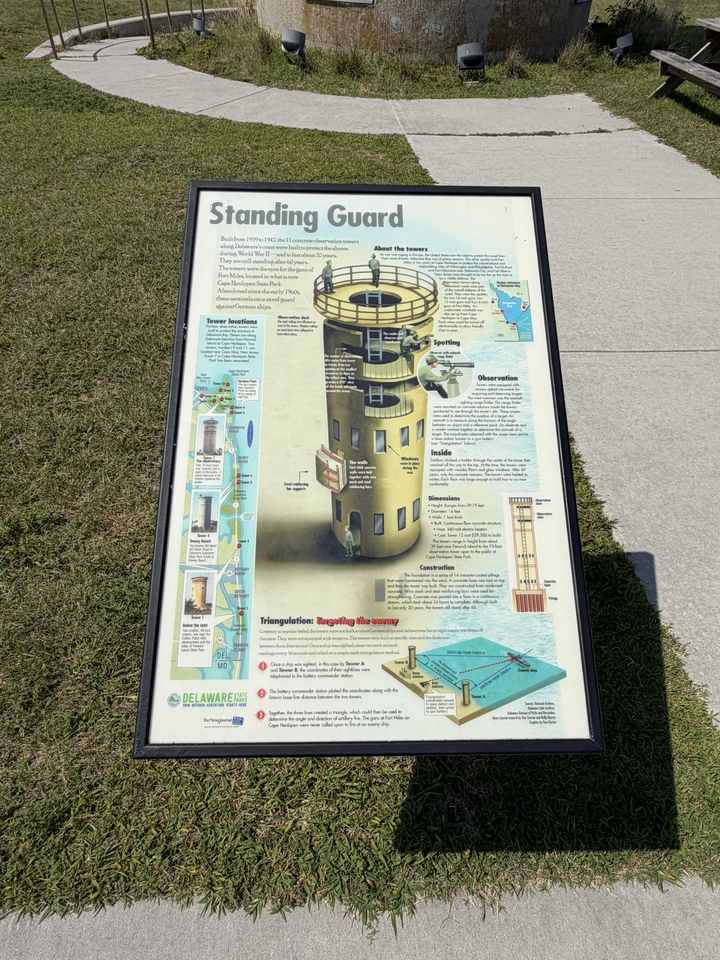
The answer was triangulation, and it required height and separation. Observers were placed in tall towers at precisely surveyed positions along the coast. Each tower had optical instruments and a known, fixed location. When a target appeared, observers in two or more towers took simultaneous bearings on it.
Because the distance and orientation between the towers was known exactly, and the angle from each tower to the ship could be measured, the ship's position could be computed by triangulation — the same geometry a surveyor uses, applied to a moving warship. Those readings were relayed to a plotting room, where they were combined, tracked over time to derive course and speed, and converted into a firing solution for the gun batteries at Fort Miles.
The towers, in other words, were not lookouts in the ordinary sense. They were the sensor array of a distributed weapons system — the eyes of guns that could not see for themselves. That is why they always come in groups, why their positions are precise rather than convenient, and why they are tall.
Why they look like that
Every design feature is functional. The Division of Historical and Cultural Affairs, which now oversees their preservation, describes towers ranging from 40 to 90 feet in height, with walls a foot thick and a diameter of about 17 feet — reinforced poured concrete, sometimes mixed with beach sand on site, with horizontal slits near the top for the optical instruments and vertical slits lower down to let in light. A single door was set at the base, facing away from the beach. Each tower reportedly took about eight days to build.
The round shape resists blast from any direction and uses material efficiently — there is no advantageous angle to hit it from. The height extends the observer's horizon, which is the entire point of the structure. The absence of ornament reflects what they were: wartime construction, built quickly, to a standard design, for a job that had nothing to do with appearance.
Built to last about ten years
The towers went up in the early 1940s as part of the Fort Miles harbor defense system, and by the state's own account they were expected to last roughly a decade. That expectation turned out to be almost beside the point. The weapons system they served was approaching obsolescence before the war even ended. Radar could range and track a target in darkness and fog, conditions in which optical triangulation was useless. Air power changed both what threatened a harbor and what could defend one. By the 1950s, fixed heavy coastal artillery was finished as a category, and the elaborate optical apparatus that supported it went with it.
The towers stopped being militarily relevant within about a decade of being built. Nobody knocked them down.
Why they are still here
Reinforced concrete cylinders built to withstand naval gunfire turn out to be extremely difficult and expensive to demolish, and they occupied land — dunes, state parkland, undeveloped coast — where nobody urgently needed the space. So they stayed. Over the following eight decades, the thing that was built as military infrastructure quietly became something else: a landmark, a navigational reference for locals, a photographic subject, and eventually a heritage asset the state actively works to preserve.
Eleven of these towers still stand in Delaware, across Cape Henlopen State Park, Delaware Seashore State Park, and Fenwick Island State Park. One of them — Tower 3, at Delaware Seashore State Park, just south of Dewey Beach — was restored and reopened to the public in 2023, with a rebuilt staircase that lets visitors climb to the top and look out through the same slits the observers once used. Access is seasonal and depends on ongoing maintenance, so check current hours with Delaware Seashore State Park before planning a visit.
The claim we are not making
You will sometimes see it said that Delaware is the only state that still has all of its original fire control towers. It is a good story, and it may even be true, but this publication has not been able to verify it to its own standard, and the state's own published material on the towers does not make that claim either — it states the tower count and leaves the superlative alone.
Part of the difficulty is scope. The wartime fire-control system tied to Fort Miles extended across both the Delaware and New Jersey sides of the bay, and totals reported for that combined system do not line up neatly with the eleven still standing on the Delaware side, because the two figures are not counting the same thing. Whether "all of its original towers" means all of Delaware's towers, all of the combined system's towers, or something else again changes what is actually being claimed.
So here is the sentence we can stand behind instead: Delaware has eleven surviving fire control towers, a remarkable concentration of a rare structure type, preserved in far greater number than almost anywhere else on the Atlantic coast. It is a smaller claim than the one on the postcard. It is also one we have checked.
Going up
Tower 3 is the one to climb, when it is open. From the ground, the towers read as objects — slightly strange, slightly forgotten, part of the furniture of a beach vacation. From the top, looking out through the slit at the Atlantic, a tower stops being an object and becomes a position: one point of a triangle whose other points run down the coast, once aimed at water where a battleship was supposed to appear.
It never did. The observers watched an empty ocean for years, the technology that made their work meaningful was obsolete before most of them were discharged, and the structures they stood in have now outlived their design life several times over, becoming one of the defining images of the Delaware shore. Then everyone forgot what they were for — which is the part worth fixing.
The towers share Cape Henlopen with another slow-moving landmark worth knowing before you visit: the Great Dune, which used to migrate across the park until the Army pinned it down during the same war.
The same stretch of coast draws anglers as often as history buffs — if you're planning a beach day near the towers, our surf fishing guide covers reading the water, rigging up, and the permits worth checking before you go.
Sources: Delaware Division of Historical and Cultural Affairs, "Fire Control Towers" (history.delaware.gov/preservation/firetowers); Delaware State Parks and Cape Gazette/WGMD reporting on the 2023 reopening of Tower 3. The "only state with all original towers" claim is widely repeated in tourism writing but is not made by the Division's own published material and is not repeated here as fact.